

At Portland, we ASPIRE in everything we do.
At Portland Spencer Academy we provide high quality teaching and learning for all pupils, every day, so that no-one gets left behind.
Our Connected Curriculum is designed around our ASPIRE VALUES:
 Achieve greatness through independent learning
 Succeed together
 Possibilities are endless
 Improve through reflection and learning from mistakes
 Responsible for our choices
 Everyone is important
Portland Spencer Academy Curriculum Intent #ASPIRE
These 6 key principles underpin the choices that our teachers make when deciding what are going to be the themes for the children’s learning. Our ‘Connected Curriculum’ is underpinned with relevant, up-to-date research and represents our high expectations, is challenging and designed to address the disadvantaged gap. Everything that we do is based upon our knowledge of our children and we pride ourselves on our ‘whatever it takes’ ethos.
Our curriculum is progressive with clear links between subject areas. We continuously build upon previous learning as we expand, broaden and deepen the knowledge and skills of our children using carefully planned sequential learning and regular retrieval practice. This layered. systematic approach has led to a progressive and diverse curriculum which allows our children to holistically develop their knowledge, vocabulary and understanding of their local area, as well as the wider world. Our fully inclusive approach allows us to adapt to the learners individual needs and promote challenge. Reading permeates and strengthens our curriculum. Each theme is enhanced by quality texts.
Subject leaders play a large role in the successful delivery of our ‘connected curriculum’ with regular monitoring, evaluation and review of the curriculum. Our ‘Connected Curriculum’ ensures children leave Portland Spencer Academy with ambition, drive and enthusiasm equipping them with the tools to thrive and ASPIRE in whatever path they choose to undertake.
Our Connected Curriculum allows learning to make sense!
It is…
- Designed for and by all our children
- Underpinned by research around how children learn best (click here to find out more)
- A passport to the world through a love of books
- Enhanced by real life experiences and inspirational people to create lifelong memories
- A vehicle to promote curiosity whilst having lots of fun!
Our curriculum is broad and balanced, with every subject meeting or going beyond the National Curriculum requirements.
Subjects are taught to a high standard – click below for individual subject intents.


Please click here for more information and to see our Portland library.
Overview of Themes from Nursery to Year 6
with main subject drivers indicated
|
Year |
Autumn 1 | Autumn 2 | Spring 1 | Spring 2 | Summer 1 | Summer 2 |
| EYFS (Nursery and F2) | Who lives in our family?
PSED/P&C |
What changes can we see outside?
UTW |
What is the weather like around the world?
UTW |
What does life look like around the world?
UTW/P&C |
Can you describe the changes?
UTW |
How are animals different?
UTW/P&C |
| KS1 (Year 1 and 2) |
How has Nottingham changed over time? Geography/History/Science |
How is my childhood different from the olden days? History |
What are the similarities between the countries in the UK?
Geography |
What are bridges used for?
DT/ Science |
What plants grow in our local environment?
Science |
Is it always sunny in the summer? Geography/Science |
| Y3 |
How did our human history all begin? History |
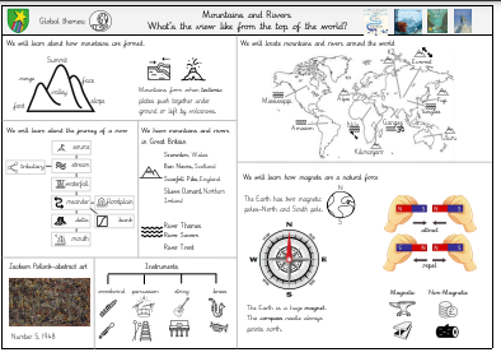
What is the view like from the top of the world?
Geography |
Why was the Nile the centre of Egyptian life?
History |
Which Pharaohs helped lead the Ancient Egyptian legacy?
History |
What is life like around the Mediterranean?
Geography |
How do we look after our local wildlife? Science |
| Y4 |
Who were the Ancient Greeks? History |
What are natural disasters?
Geography |
Who were the Romans?
History |
What was Roman Britain like?
History |
Where does food go?
Science |
Why are interventions important? Science |
| Y5 |
Who occupied Britain after the Romans? History |
Were the Vikings vicious?
History |
What impact can we have on our environment?
Geography/ Science |
What is out there, beyond Earth?
Science |
What happened to the Mayan people?
History |
How has power changed throughout history? History |
| Y6 | How can we live a healthy lifestyle?
Science |
How were the Victorians Victorious? History |
Where did it all begin?
History |
How does life survive?
Geography / Science |
Where did it all end?
History |
How can we prepare for change? DT/Art/Muisc |
Long term plans for Nursery to Year 6
Our long term plans indicate what is taught in each subject, in each year group throughout the academic year.
- EYFS Long Term Plan
- Year 1/2 Long Term Plan
- Year 3 Long Term Plan
- Year 4 Long Term Plan
- Year 5 Long Term Plan
- Year 6 Long Term Plan
Knowledge Organisers
2026-27
| Autumn 1 | Autumn 2 | Spring 1 | Spring 2 | Summer 1 | Summer 2 |
| Nursery | |||||
| Reception | |||||
| Year 1/2 | |||||
| Year 3/4 | |||||
| Year 5 | |||||
| Year 6 |
2025-26
| Autumn 1 | Autumn 2 | Spring 1 | Spring 2 | Summer 1 | Summer 2 |
| EYFS | EYFS | EYFS | EYFS | EYFS | EYFS |
| Year 1/2 | Year 1/2 | Year 1/2 | Year 1/2 | Year 1/2 | Year 1/2 |
| Year 3 | Year 3 | Year 3 | Year 3 | Year 3 | Year 3 |
| Year 4 | Year 4 | Year 4 | Year 4 | Year 4 | Year 4 |
| Year 5 | Year 5 | Year 5 | Year 5 | Year 5 | Year 5 |
| Year 6 | Year 6 | Year 6 | Year 6 | Year 6 | Year 6 |
2024-25
| Autumn 1 | Autumn 2 | Spring 1 | Spring 2 | Summer 1 | Summer 2 |
| EYFS | EYFS | EYFS | EYFS | EYFS | EYFS |
| Year 1/2 | Year 1/2 | Year 1/2 | Year 1/2 | Year 1/2 | Year 1/2 |
| Year 3 | Year 3 | Year 3 | Year 3 | Year 3 | Year 3 |
| Year 4 | Year 4 | Year 4 | Year 4 | Year 4 | Year 4 |
| Year 5 | Year 5 | Year 5 | Year 5 | Year 5 | Year 5 |
| Year 6 | Year 6 | Year 6 | Year 6 | Year 6 | Year 6 |
2023-24
| Autumn 1 | Autumn 2 | Spring 1 | Spring 2 | Summer 1 | Summer 2 |
| Nursery | Nursery | Nursery | Nursery | Nursery | Nursery |
| Reception | Reception | Reception | Reception | Reception | Reception |
| Year 1 | Year 1 | Year 1 | Year 1 | Year 1 | Year 1 |
| Year 2 | Year 2 | Year 2 | Year 2 | Year 2 | Year 2 |
| Year 3 | Year 3 | Year 3 | Year 3 | Year 3 | Year 3 |
| Year 4 | Year 4 | Year 4 | Year 4 | Year 4 | Year 4 |
| Year 5 | Year 5 | Year 5 | Year 5 | Year 5 | Year 5 |
Why we do it…
In recent decades, cognitive scientists have confirmed the need for a knowledge-engaged curriculum for two reasons:
Knowledge frees up your brain’s capacity for thinking
Cognitive scientists have found that our brain works at different speeds, depending on whether we have learned something already, or whether we are relying on “working memory”. Working memory is new information you can keep in your head and is very limited (holding between three and seven pieces of new information). That is why learning your times tables by heart is useful. Completing more complex calculations is made more simple if knowledge of tables is already ‘locked in’. For this reason, we have daily fluency lessons and all lessons begin with a ‘connect back’ to active prior knowledge and free up the brain’s capacity for thinking.
We learn new things by connecting them to old things
The way in which the brain stores new information, and makes inferences and discoveries, is by connecting to existing stored knowledge (schema). You cannot have skills without knowledge, because you cannot evaluate something you do not know anything about. You also cannot come up with new ideas without jumping off existing ones. At Portland, to help children make connections to prior learning we have ‘connect backs’ at the start of every lesson, regular retrieval practice and learning journeys with ribbons to make connections to previous learning explicit to our children.
To find out more about our curriculum, please contact Joe Handy, Principal via: info@portlandspencer.org.uk